

- Dr. Pamreihor Khashimwo
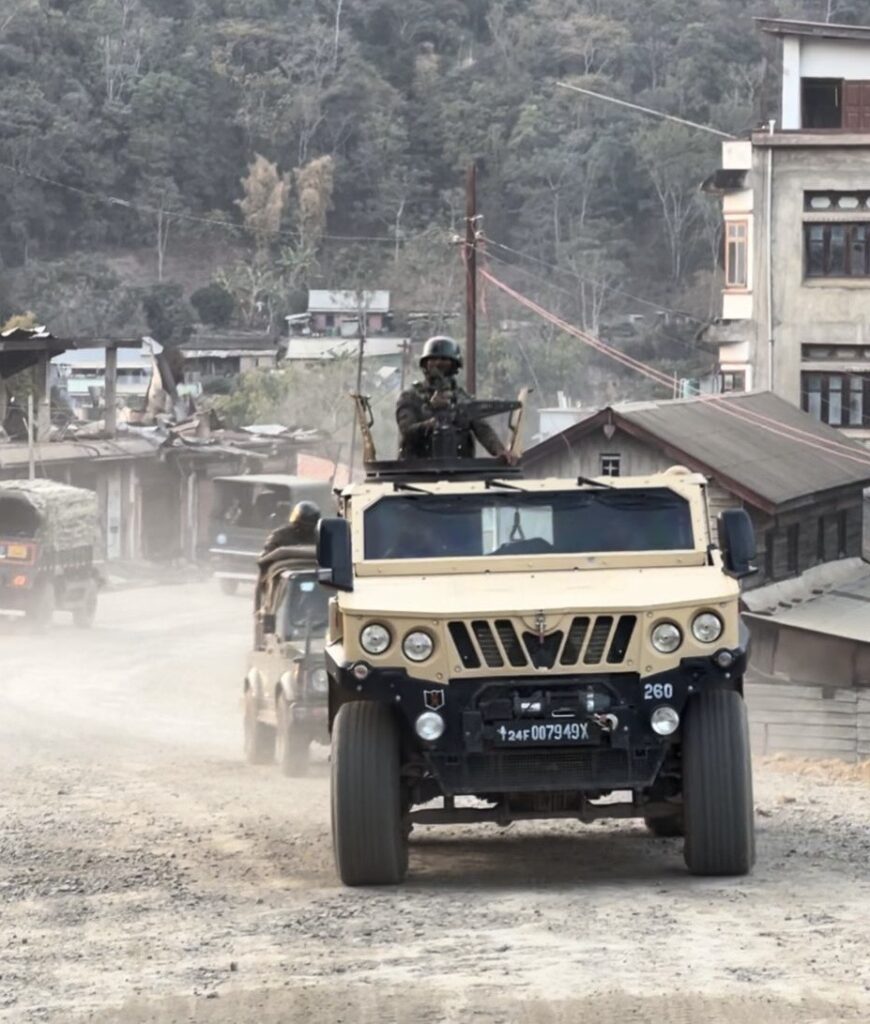
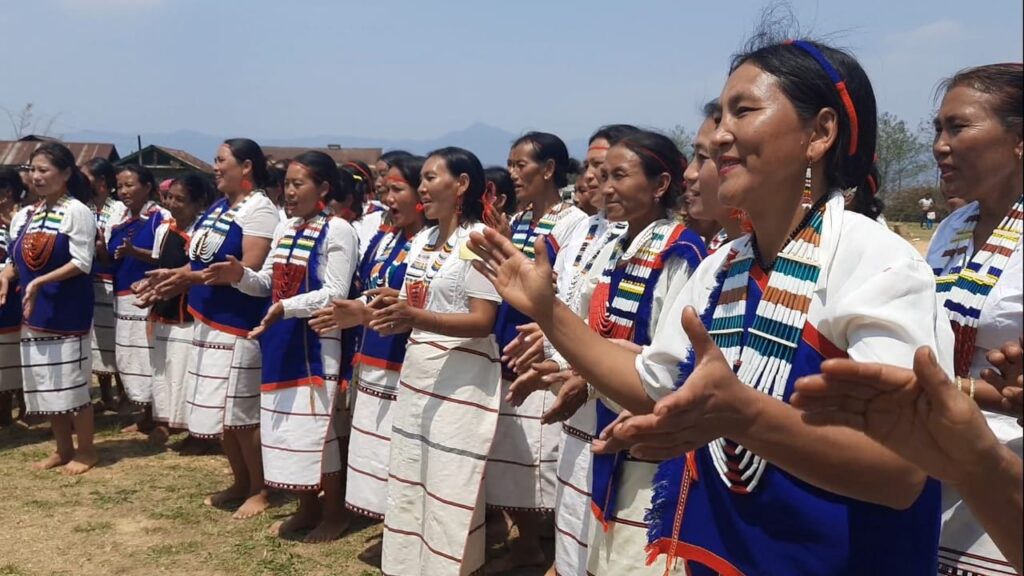
Ukhrul, Manipur | EKHON: On 15 February 2026, as cultural troupes gathered and speeches echoed across Ukhrul headquarters, the United Naga Council (UNC) pressed ahead with the celebration of Lui-Ngai-Ni, the Naga seed-sowing festival meant to symbolise renewal, unity, and hope. Yet only a short distance away, Litan in the same district simmered in crisis. Homes were anxious, communities unsettled, and the Tangkhul psyche weighed down by uncertainty.
In such a context, the question is unavoidable: what does it really mean to celebrate Lui-Ngai-Ni in 2026?
Lui-Ngai-Ni is not merely a festival. Instituted as a common seed-sowing observance among Nagas, it is a political-cultural statement, a shared assertion of identity across tribes and territories. The festival’s deeper meaning lies in its symbolism of sowing seeds for a collective future. But when the ground itself is unstable, when the community is grappling with unresolved tensions in Litan, the symbolism rings hollow. Seeds sown in troubled soil do not promise a healthy harvest.
The decision of the UNC to proceed with the festivities, despite the ongoing Litan crisis, reveals a troubling form of what can only be described as “celebratory activism,” a politics of spectacle over substance. Instead of channeling its institutional weight toward addressing the crisis, the leadership chose the optics of unity rather than the hard work of reconciliation and collective defense.
Even more disheartening was the audio clarification and defense offered by the president of the Tangkhul Shanao Long. Her justification, that the festival cannot be compromised, projected an alarming absence of empathy and strategic leadership. Leadership is not measured by rigidity in protocol but by moral imagination. When communities are hurting, flexibility is strength, not weakness. To insist on celebration as a matter of non-negotiable principle betrays a failure to grasp the scale and implications of the crisis.
The Litan issue is not an isolated, parochial matter confined to a single locality. It carries far larger implications for the Tangkhul community as a whole. In the tightly knit fabric of Naga society, crises are never geographically contained. They reverberate across clans, villages, and generations. If the so-called working committees of our Tangkhul civil society organisations cannot comprehend this interconnectedness, then the future of the Tangkhul risks a slow, almost unnoticeable erosion, which I may describe as an “amusing death”: a decline masked by drumbeats and speeches.
History offers no justification for such inflexibility. Across the world, national leaders routinely postpone summits, celebrations, and state visits when crises strike at home. Moments of grief or instability demand solidarity, not spectacle. Even in Naga customary practice, village seed-sowing festivals have always varied in date. Lui-Ngai-Ni’s fixation on 15 February is a relatively recent institutional standardisation, not an immutable ancestral decree. To argue that postponement would dilute the festival’s nature is historically and culturally unsound.
The irony is profound. Lui-Ngai-Ni, by its very symbolism, should embody sensitivity to the rhythms of the land and the pulse of the people. Agriculture teaches patience, adaptability, and responsiveness to conditions. Farmers do not sow seeds in the middle of a storm merely because the calendar dictates it. They wait for the right season or time. Why, then, must civil society leaders cling to a date when the social climate is evidently turbulent?
What we witnessed instead was a retreat into rhetoric. Speeches extolled unity, while the lived experience of many Tangkhul families spoke of anxiety and disillusionment. Cultural performances attempted to project normalcy, but the subtext was unmistakable: the leadership preferred ceremony over confrontation of uncomfortable realities.
This is not merely a matter of optics. It is a question of moral authority. CSOs in Naga society occupy a ubiquitous and influential space. They are often more trusted than formal political institutions. The UNC and Tangkhul CSOs claim to represent the collective will of the people. Such a claim demands accountability and a keen sensitivity to public perception.
Today’s Gen-Z, youth, women, and public are politically aware and socially connected in ways previous generations were not. They observe inconsistencies. They sense dissonance between words and actions. Hope, confidence, and belief in leadership are fragile currencies. When leaders appear indifferent or dismissive of genuine grievances, trust evaporates quickly.
A leader who fails to understand the pulse of the public risks losing vision. Detached from ground realities, leadership morphs into a self-referential echo chamber, an autocratic posture masquerading as guardianship of tradition. In defending the indefensible act of proceeding with pomp amid crisis, the leadership inadvertently signaled that institutional pride outweighed communal pain.
To be clear, no one disputes the cultural importance of Lui-Ngai-Ni. The festival has played a significant role in fostering Naga solidarity in Manipur. But solidarity is not sustained by symbolism alone. It requires tangible demonstration of care, especially during moments of collective vulnerability.
Canceling or postponing the 2026 celebration would not have diluted Lui-Ngai-Ni’s essence. On the contrary, it could have strengthened it. A collective decision to defer festivities in solidarity with Litan would have sent a powerful message: that Naga unity is not performative but principled. That empathy guides action. That community precedes ceremony.
Instead, by insisting that the festival cannot be compromised, the leadership reduced tradition to rigidity. Culture is dynamic; it evolves in response to context. The Nagas have survived centuries of upheaval precisely because of their adaptive resilience. To treat a modern institutionalised date as sacred beyond reconsideration betrays a misunderstanding of both history and politics.
Moreover, the spectacle of celebration risks trivialising the grievances underlying the Litan crisis. Communities affected may feel sidelined, their concerns overshadowed by festivities. The psychological message is subtle but potent: life goes on, with or without your resolution. That perception deepens alienation.
In the long term, such alienation fragments rather than unifies. If the Tangkhul community cannot collectively prioritise its pressing issues over ceremonial display, internal fissures may widen. The very unity Lui-Ngai-Ni seeks to cultivate could be undermined by the manner of its observance.
It may be argued that halting cultural life in response to every crisis sets a dangerous precedent. But this was not every crisis. The Litan issue strikes at the heart of communal cohesion. It is precisely in such moments that symbolic gestures carry heightened meaning. A temporary pause would not signal weakness; it would demonstrate moral seriousness.
The deeper concern is the pattern this episode reveals: a preference for speech over substance, celebration over strategy, and optics over outreach. If UNC and Tangkhul CSOs retreat into “celebratory activism” while society needs grounded leadership, their credibility will erode.
Leadership demands courage, the courage to disappoint event organisers, to rework schedules, to absorb criticism for postponement, and to prioritise communal healing. It demands the humility to acknowledge that tradition serves people, not the other way around.
In 2026, the drums of Lui-Ngai-Ni echoed in Ukhrul. But beneath their rhythm was a quieter question: who are we celebrating for? If celebration becomes an escape from confronting crisis, it ceases to be a symbol of renewal and becomes instead a mask for avoidance.
The Tangkhul and the wider Naga community deserve more than ceremonial reassurance. They deserve leaders who can read the weather before sowing seeds, leaders who understand that in times of storm, tending to the soil is more urgent than dancing upon it.
The true test of Lui-Ngai-Ni is not whether it is held punctually on 15 February. It is whether it genuinely embodies unity, empathy, and shared responsibility. In 2026, that test was not convincingly passed.
If this moment becomes an opportunity for introspection, for recalibrating priorities and reconnecting with the public pulse, then perhaps some good may yet emerge. But if the lesson is ignored, if “celebratory activism” continues to eclipse substantive engagement, then the future of UNC and Tangkhul leadership risks drifting toward irrelevance.
In agriculture, a failed season teaches caution and preparation for the next. In society, a misjudged celebration should teach leaders to listen more closely. The seeds of trust must be sown with care. Without that, no festival, however grand, can promise a meaningful harvest.
(Views expressed are the author’s and don’t necessarily reflect the site’s official policy. Content is for informational and opinion purposes only.)

