

At Phaibung Khullen, a festival once reduced to a feast is reclaiming its games, stories and sense of community, and giving a younger generation a chance to inherit what was nearly lost.
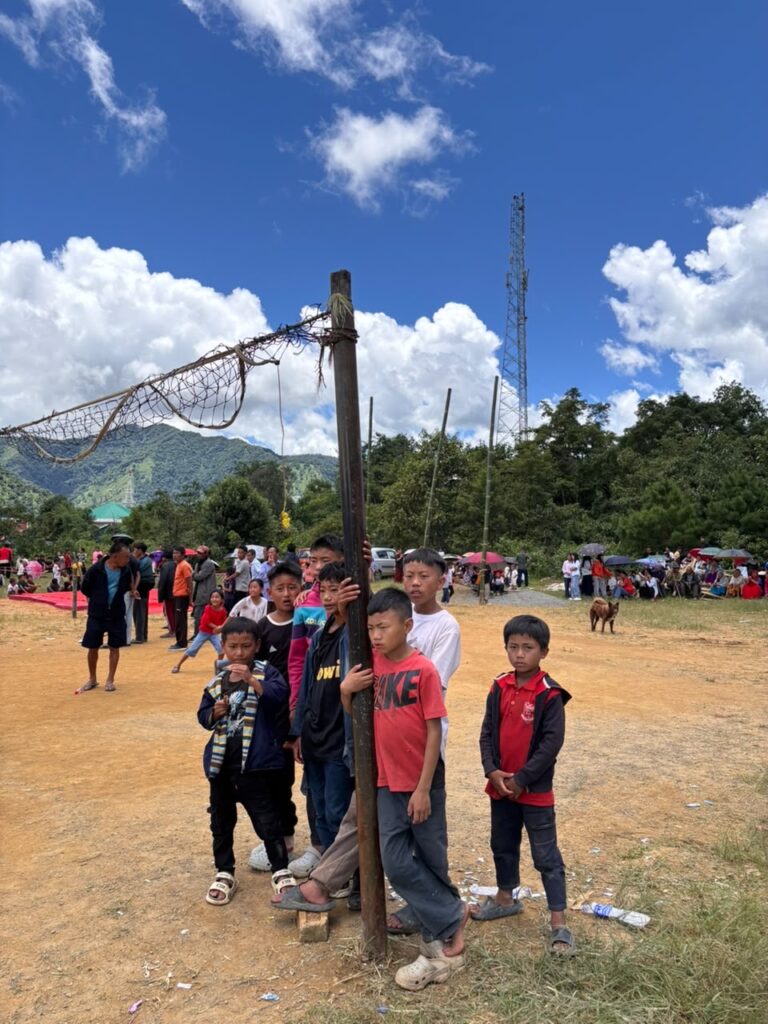
Phaibung Khullen, Senapati | EKHON: The first thing that caught my attention was not the festivities. It was the children. They moved across the open ground under a wide blue sky, laughing and chasing one another between clusters of elders seated around the field. There were so many of them that their presence itself seemed exceptional.
Having travelled through numerous remote villages across the hills of Manipur, I have rarely encountered one with such a large and vibrant young population. Only later did I realise that perhaps this was exactly the kind of place where a cultural revival could take root. For traditions to survive, there must be young eyes to see them, young ears to hear them and, eventually, young hands to carry them forward.
On July 25, Phaibung Khullen, known locally as Zhifiimai, a village of more than 700 households in Manipur’s Senapati district, about 70 km from the district headquarters, offered a glimpse of what that might look like.
At the centre of the festivities was Poyu, the community’s traditional form of wrestling. As contestants grappled before a cheering crowd, the bouts seemed about more than physical strength. They were a return to memory and identity, an attempt by the community to reclaim traditions that had gradually slipped away.
The village celebrated Laonii, the Poumai Naga community’s post-paddy-transplantation festival, by reviving traditional games and customs that, villagers said, had largely disappeared from public celebration for nearly four decades.
For the Poumai people, Laonii is not simply another festival on the calendar. It comes at the end of one of the most demanding stages of the agricultural cycle.
After weeks of ploughing fields and transplanting paddy, farmers finally put down their tools. Laonii is a collective exhale, a time to thank God, reconnect with family and community, and celebrate the completion of hard work while awaiting the harvest.
Unlike many neighbouring Tangkhul villages, where festivals such as Luira mark the beginning of the cultivation cycle, the Poumai community places particular importance on the completion of paddy transplantation.
In Phaibung, Laonii is regarded as the biggest celebration of the year, with a significance that, villagers say, can even surpass Christmas.
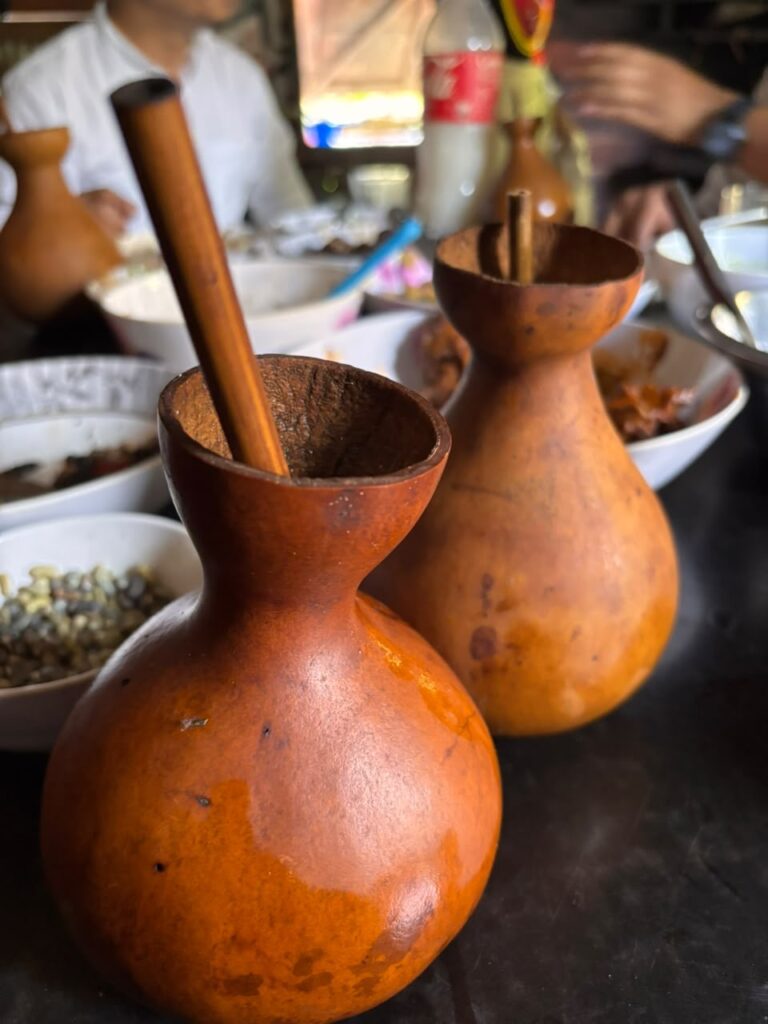
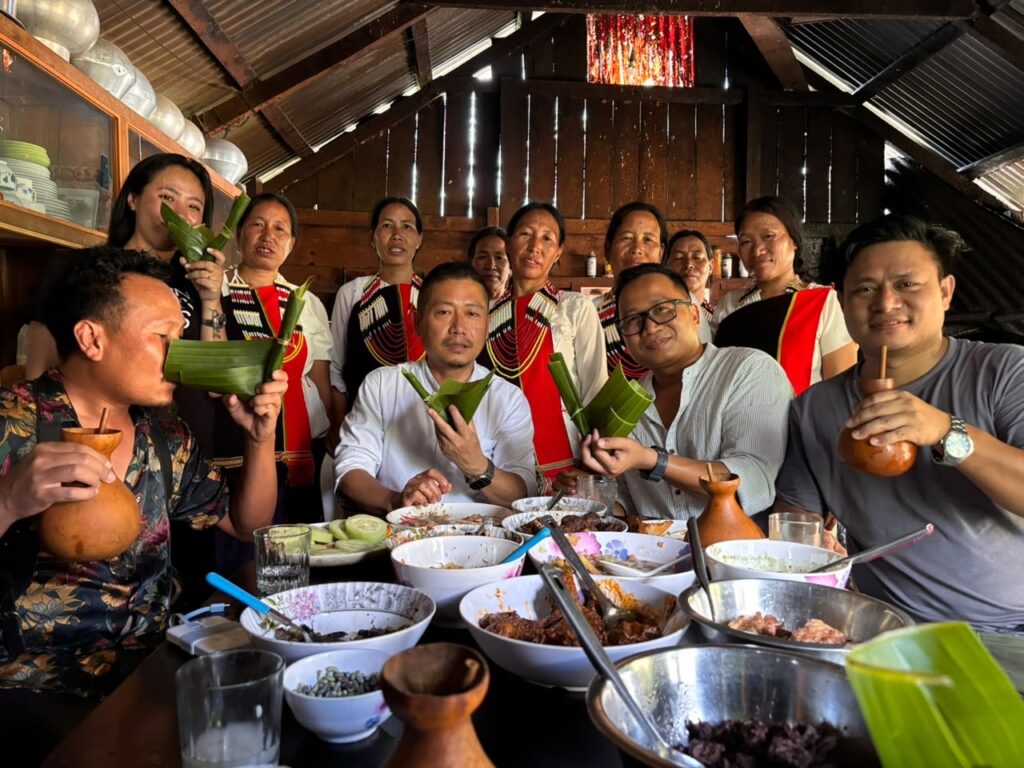
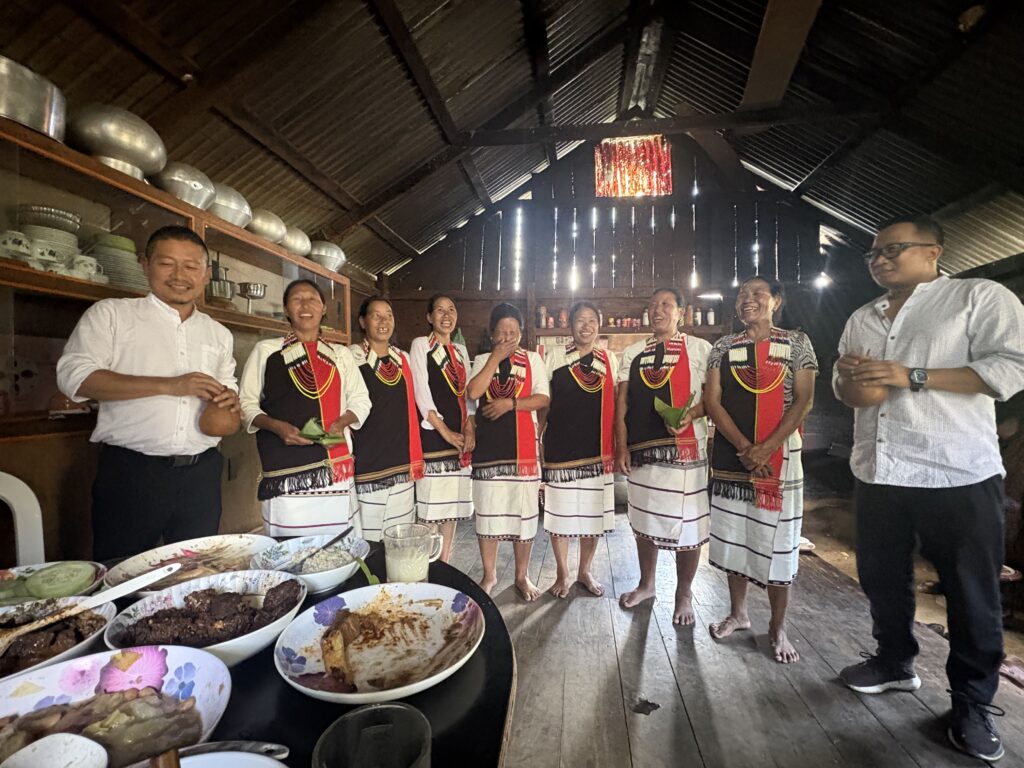
During this festival, families prepare generous quantities of meat and traditional drinks. After weeks of physically demanding agricultural work, the feast is a time to replenish strength and celebrate together. But modernisation has gradually changed the character of the festival.
The feast may have survived but the traditional games and customs did not, however, this year, that changed in this remote Poumai village.
“We continued celebrating Laonii, but only in name,” said Duna Duo, ADM and SDO i/c, Jessami, Ukhrul district, who belongs to Phaibung Khullen.
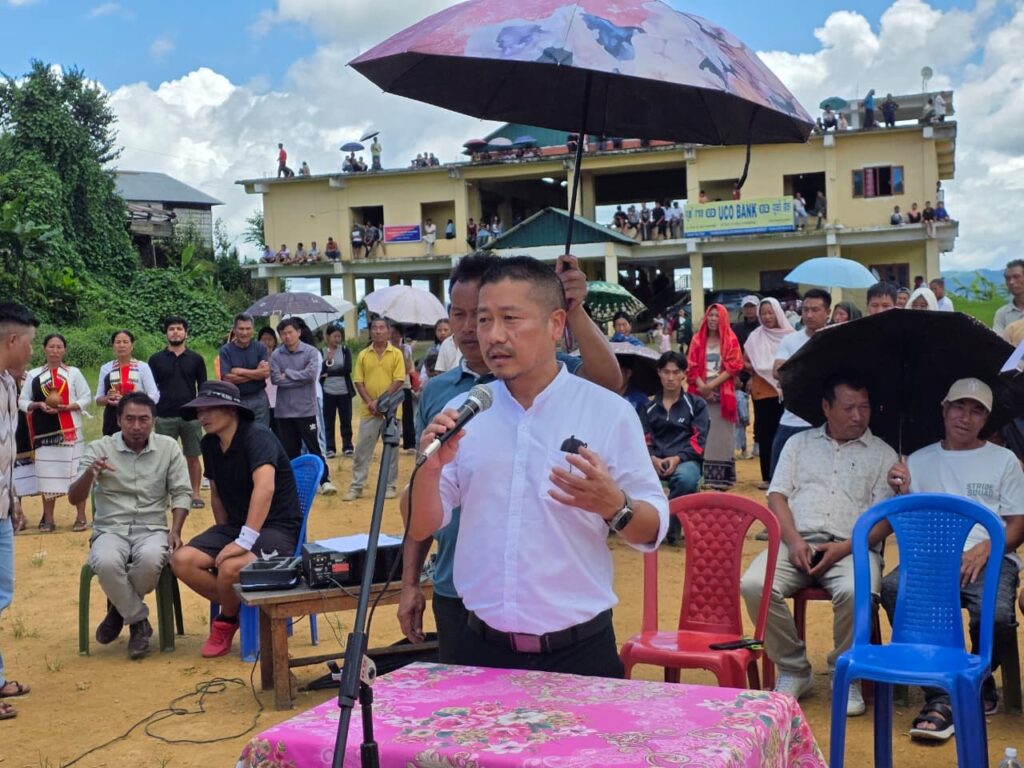
“During my childhood in the late 1980s, I remember traditional wrestling, singing competitions, storytelling and many indigenous games. Over the years, those traditions gradually stopped. This year we wanted to bring them back.”
And they did.
Alongside wrestling, villagers organised pole climbing, folk-song competitions and storytelling, activities once familiar to older generations but increasingly distant from the lives of younger people. Watching the gathering, you could sense that the elders were not merely watching the competitions, they were reliving memories.
It reminded me of my own younger days, when we grew up listening to amazing, sometimes magical tales that seemed to belong to a world far removed from today’s AI-generated stories, endless reels and fleeting digital content.
Those stories did more than entertain us. They shaped our imagination, connected us to our roots and gave us a sense of wonder that no screen can quite recreate.
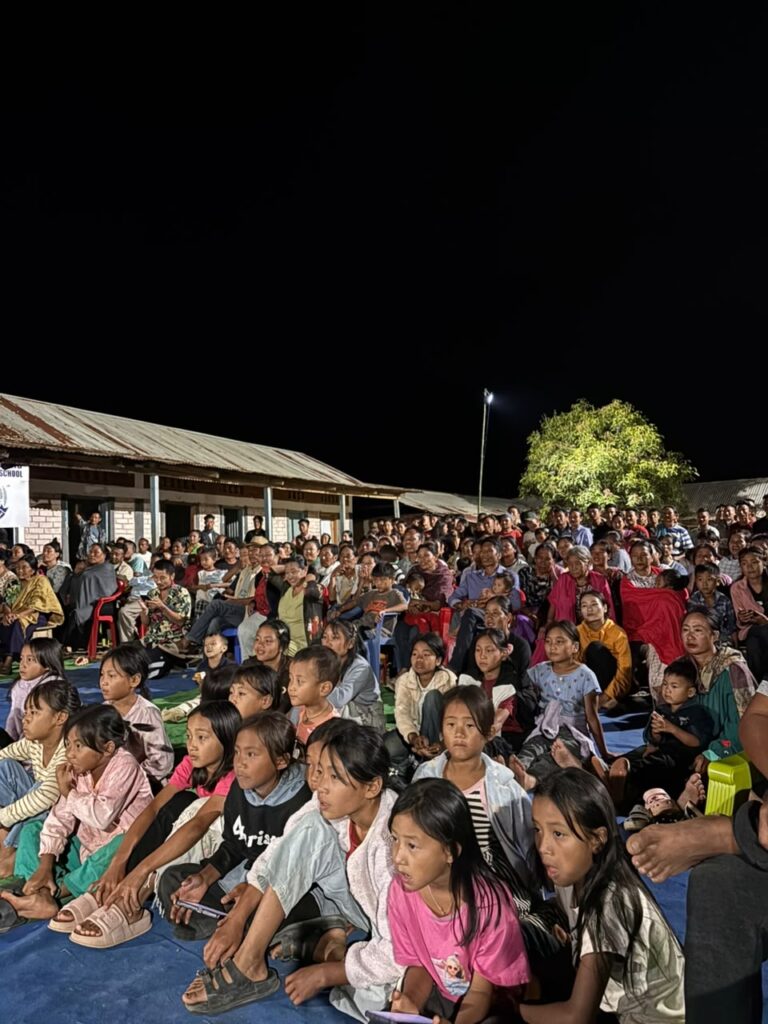
Phaibung remains one of the more remote villages in Senapati district, close to the boundary with the Tangkhul region in Ukhrul district. Its isolation, however, has not prevented cultural exchange. That became particularly visible after sunset at Lower Phaibung.
Rather than restricting the evening programme to local performers, the organisers welcomed popular Tangkhul artists, including Shimreingam, popularly known as Raphei Tiger, singer Yuileichan Mahongnao, and other guest performers.
Poumai and Tangkhul communities have lived alongside one another for generations, and that proximity has created a familiarity in which people can appreciate one another’s music and traditions.
After seeing my story update about the folksongs, a friend remarked on how remarkably similar the songs sung by the Poumai women were to the folk songs of his forefathers from Chingjaroi village.
“If I play that song for them,” he said, “it’ll take them back, and they’ll be crying in no time.”
Perhaps that is what folk music does best. A melody can carry memory across generations, bringing back places, people and a past one might have thought was long gone. And standing around the field were the ones who will decide whether those memories live on, the children.
Their presence was impossible to ignore. Whether it was a statistical reality or simply what I happened to notice, there were children everywhere, filling the village with an unusual energy. Perhaps one reason so many young people remain in the village is its thriving Catholic school, which educates more than 500 children and teenagers from the surrounding region.
In a place where some traditions have begun to fade, having so many young people around may be the village’s greatest advantage. They are not just an audience for what is being revived; they are the generation that will decide what survives.
As the final wrestling matches ended, one thought lingered.
Naga traditions remain very much alive, especially during festivals. But some games, songs and stories can fade with time. What happened in Phaibung was a conscious effort to revive what was slowly being lost and ensure that children do not merely hear about their heritage but experience it.
They should see Poyu wrestlers grapple on the village ground. They should climb poles, sing old songs and listen to folktales told by elders. They should know that the festival their grandparents once celebrated was more than a feast.
And if the smiles on the elders’ faces were anything to go by, bringing those old traditions back for the children felt like bringing Laonii home again.
(The writer can be reached at jenny.thingshung@gmail.com.)
