

Participants were trained in bird species identification, census methodologies, and the use of digital conservation tools.
Ukhrul, Manipur | EKHON: The Ukhrul Forest Division, ENFOGAL, and Pettigrew College’s Zoology Department wrapped up a three-day bird census in Ukhrul’s Shirui and Phangrei hill ranges and recorded 73 species and 803 individual birds ahead of International Day for Biological Diversity.
The census brought together forest officials, conservation experts, researchers, and enthusiastic zoology students in a collaborative field exercise aimed at documenting and understanding the avian diversity of the region. The initiative combined scientific monitoring with environmental education, offering students practical exposure to wildlife conservation techniques while fostering community participation in biodiversity protection.
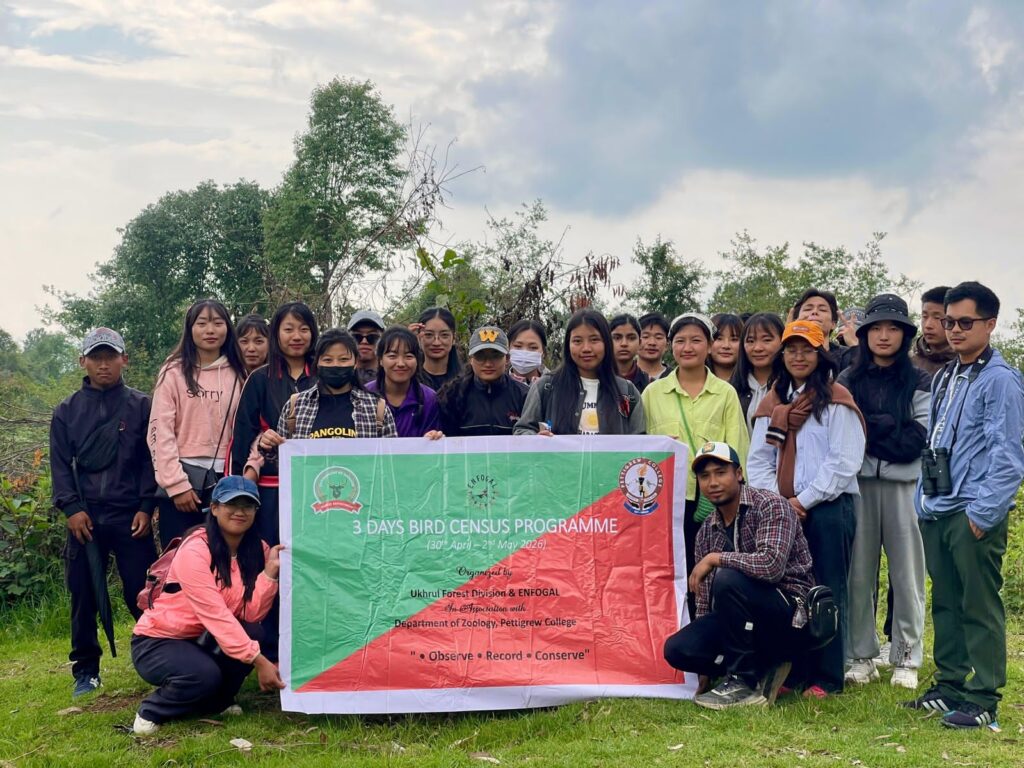
During the survey, participants were trained in bird species identification, census methodologies, and the use of digital conservation tools such as Merlin Bird ID and eBird. The exercise highlighted the growing role of citizen science and technology in ecological monitoring.
The Technical team of ENFOGAL along with faculties of Pettigrew College, Dr. Gaikhuanlung Ngaomei, Dr. Ersilla Jajo, Dr. Christian Erni, Shunringla Rungsung, and student volunteers, documented a rich and thriving bird population during the extensive fieldwork. According to the findings, a total of 73 bird species were identified, while 803 individual birds were recorded across the survey sites.
The list featured birds like the black francolin, kalij pheasant, crested serpent eagle, bamboo partridge, greater racket-tailed drongo, Indian blue robin, lesser cuckoo, Tickell’s warbler, little pied flycatcher, and common cuckoo, among 73 species recorded.
Officials said the data collected during the census would serve as an important baseline inventory for future biodiversity assessment and ecological monitoring in the Shirui and Phangrei regions, both known for their unique natural habitats and environmental significance.
Speaking during an interactive session with participants, Laishram Gitla emphasized the importance of involving young people in conservation initiatives.
“The core objective of aligning this census with the International Day for Biological Diversity is to instill a deep sense of environmental stewardship among the youth and transform them into young ambassadors of the region. By engaging local students in active scientific monitoring, the initiative aims to build a robust, community-led conservation movement capable of safeguarding the unique and fragile biodiversity of Ukhrul for future generations,” she stated.
The program strengthened the message that long-term forest and wildlife conservation cannot succeed without the active participation of local communities, educational institutions, and grassroots organizations.
With increasing environmental pressures threatening fragile ecosystems across the Northeast, the initiative has become a model of participatory conservation blending scientific research, youth engagement, and community awareness to protect the rich biodiversity of Ukhrul district.
The Ukhrul Forest Division reaffirmed its commitment to continuing similar collaborative conservation programs in the future, aimed at preserving the ecological heritage of the region for generations to come.
